Time to read 5 minutes
I found out about a new, UK-based company Wool Pots through Instagram and did some research. As a gardener, and knitter who works almost exclusively with wool, I was immediately drawn to the idea of also using wool in the garden.
As I have previously written about here, one of the fab ecological properties of wool is that it is biodegradable so I was excited about using it in the garden.
Plastic nursery pots have their place and I, like many people have many that I have had for years and still use them to start seeds and to pot on seedlings. However, the problem with them is that they soon mount up and due to the slight variation of size and shape are so awkward and messy to store, not to mention the fact that they are not biodegradable and so in fact, end up in landfill.

Why use wool in the garden?
Wool is excellent in the garden as it is 0 waste and as I personally asked Charles Dowding, wool is actually considered a green material in composting as it adds slow- release nitrogen and is a great alternative to peat when used as a soil conditioner.
I am excited to try these Wool Pots because when used for seedlings, I will be able to plant them out in their wool pots, without disturbing the roots. The pots will compost down, adding slow-release nitrogen to the soil, which will then enrich the plot where I grow my vegetables using the No Dig method
The other problem with plastic pots is that when I buy a plant, I tend to reuse the pots, naturally, but once they are not fit for purpose anymore, plastic pots are sent to landfill because they can not be recycled so it would be wonderful to work with a more ecological and easier to store option.
Wool Pots very kindly sent me some samples to try and here are my honest findings with working with the pots.
First Impressions
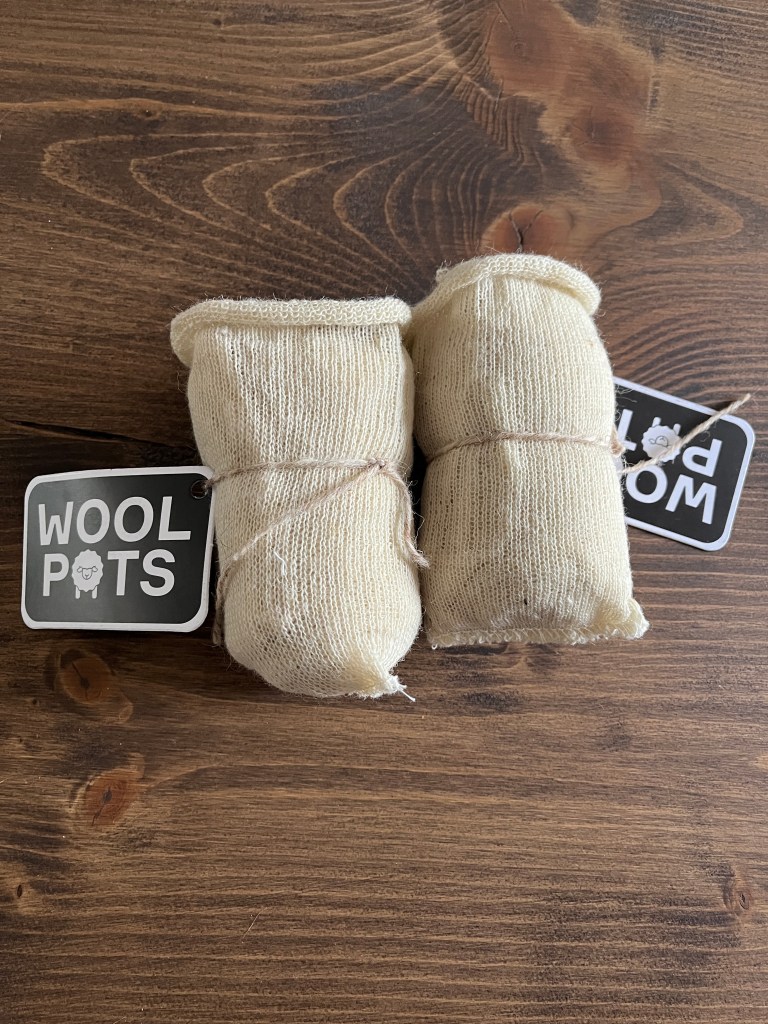
I received 20 pots from Graham at Wool Pots. They are knitted in a simple stockinette stitch, loose gauge, 100% wool pots. The gauge allows for a stretchy, light fabric which will hold its shape well and enable drainage and roots to penetrate once the plant is planted in its final spot.
The package came with a card and card label, all tied together with twine- No plastic in any of the packaging and contents, all biodegradable.
Using the pots
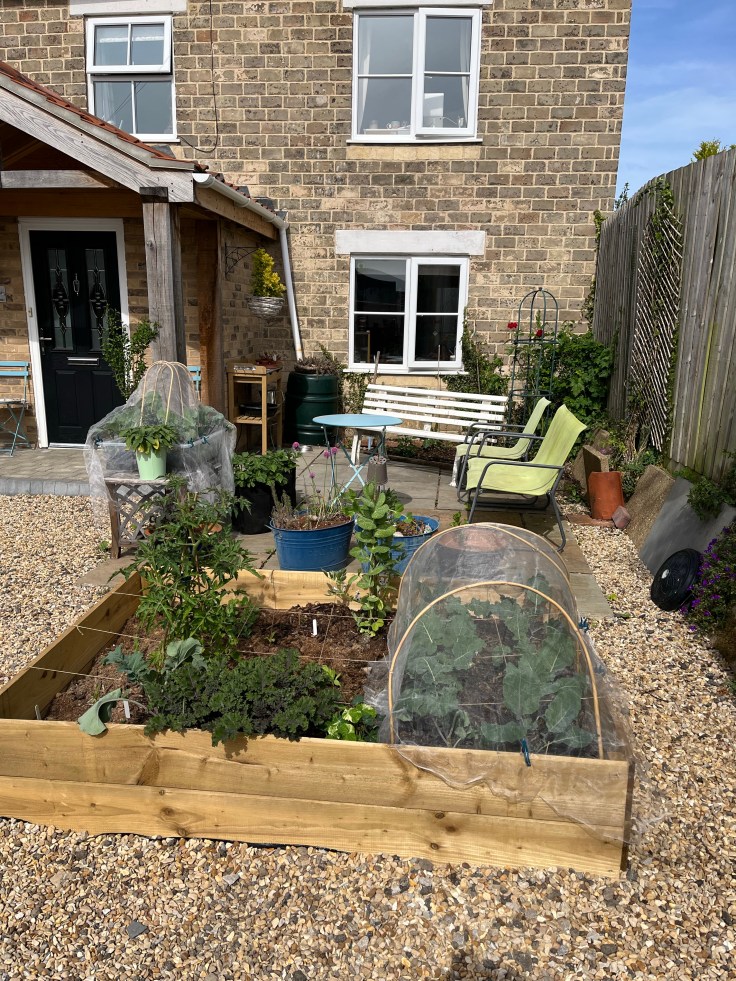
It is spring so I have a lot os seeds to start. I have decided to try the Wool Pots to start broccoli seeds. My plan is to germinate the seeds in the pots, leave them in the greenhouse over Summer and then plant them out (in their pots) in the raised bed at the end of Summer for broccoli to harvest next Spring.
Pros
*The seeds germinated without hitch in the wool pots.
*I was a little apprehensive about them keeping their shape, but with the pot rolled down to the amount of growing medium you require, they keep their shape just fine.
*What I found great about them is that I could begin by rolling the pots down and adding just a small amount of compost in the pots, just to germinate the seed, and then due to the stretchy nature of wool, as the seedlings grow, I am able to add more compost to each plant.
*Another bonus I found was that starting seeds in wool pots are a great space-saver. I was able to fit about 8-9 wool pots containing brassica seedlings on a drip tray that would only be able to hold bout 3-4 9cm nursery pots.
*The enable drainage and are able to hold enough moisture in their pots, especially when huddled together, to keep the growing medium moist, but not wet. Perfect conditions for seedlings.
*The pots are biodegradable so I can plant my seedlings out into my raised bed when they’re ready, without disturbing the roots, and they will compost down, adding slow release nitrogen to my vegetable bed- and similarly anything I wish to pot on, I will be able to use these pots as a great alternative to peat pots and high nitrogen fertiliser.

Cons
A negative aspect of the pots for me, is that the light colour of the wool means they get dirty from moist compost pretty quickly so perhaps best reserved for veggie plants and plants intended to be planted out or potted on, not plants intended solely for display in these pots.

Conclusion
Definitely a product I will be using more in the future. I will continue to use the plastic nursery pots plants arrive in so as to use what I have, but I will opt for these for my veggie plants to enable to continue to use pots that can hold my seedlings AND continue to feed the soil as the vegetables grow.
I will add an update on how I get on with the Wool Pots as we progress through the growing season.
 All Homesteading
Leave a comment