Time to read 6 minutes
The basic No Dig Gardening Method is a method of gardening I can definitely get behind. Pioneered by British gardener Charles Dowding for 40 years, it is a regenerative gardening method that is efficient, accessible and low maintenance once you get the basic principles right.
What is No Dig?
The basic principle of No Dig is working with the active biomes in the soil rather than digging, turning and disturbing it to prepare it for planting. Instead, you simply add nutrient dense organic matter to your beds to prepare it. Whatever nutrient-dense growing medium you are using will depend on when you add these to your vegetable beds, ready for planting.
*If you are using any kind of manure, best to add this in Autumn so the matter has time to compost down to plant into.
*Homemade or store bought compost can be used and planted into immediately.
In short, the No Dig gardening method is a regenerative, efficient and less back-breaking way to grow organic vegetables.

No Dig Masterclass
I attending a hands on class with Charles Dowding on a local farm. I found out about it via his site: https://charlesdowding.co.uk/ and would highly recommend attending should he have any events near you.
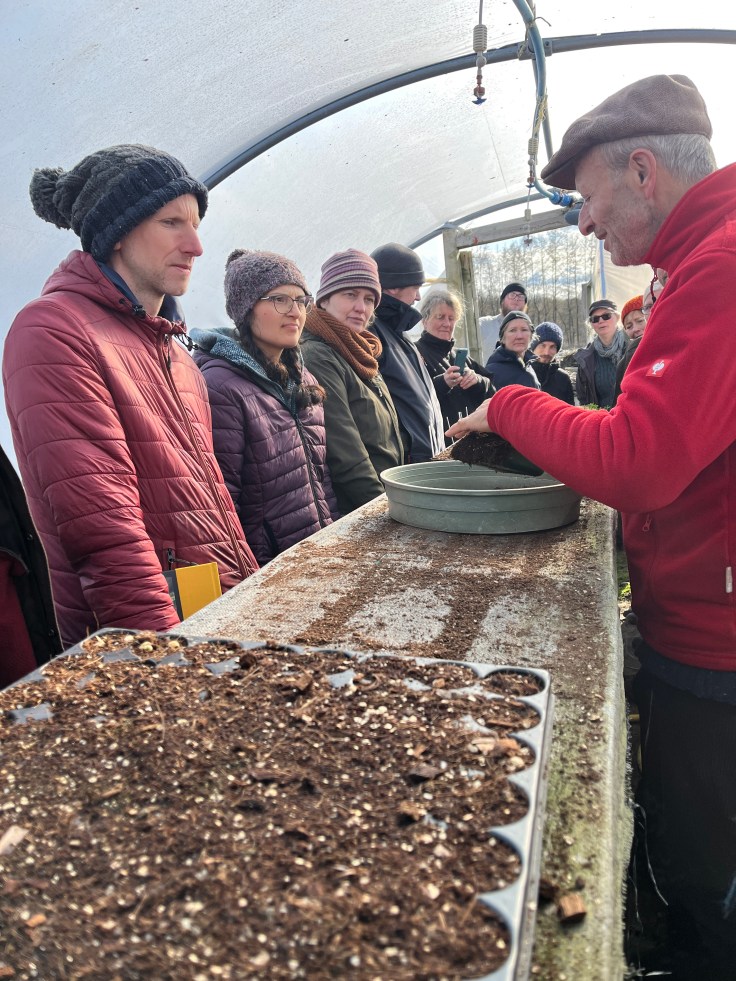
The event was well-organized into 2 hour for a talk on No Dig, making composts and alternatives and group Q&A. We had a break for lunch and book shop/book signings and then the last couple of hours we took a tour of the farm- the compost heaps, polytunnels and the growing beds where we participated in preparing one of the beds for planting.
Key Points
Here are some of the important points I took away from the day.
Preparing the ground for planting
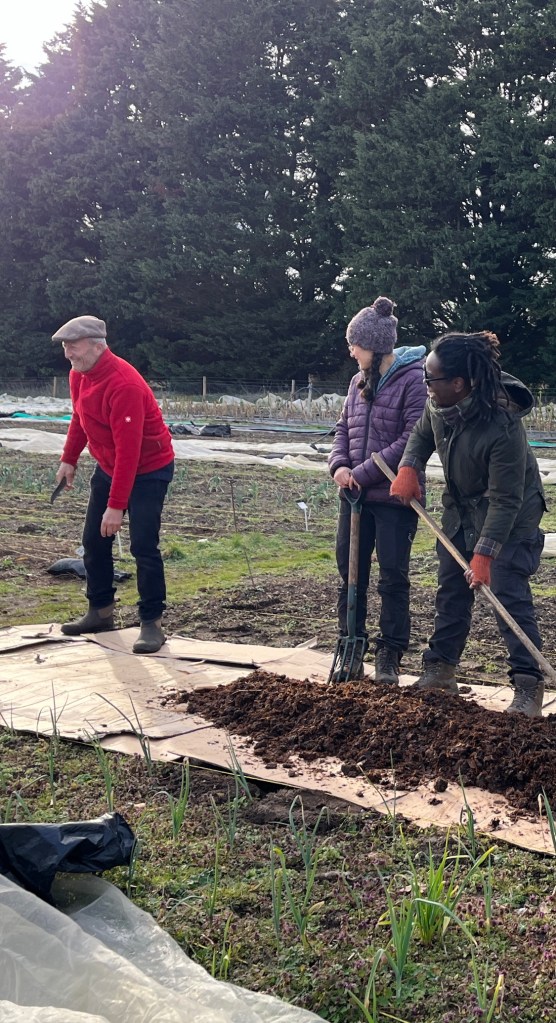
On the farm, there were many beds in various states of prep/growth. We prepared a bed that was overrun with weeds simply by putting down cardboard (we spent time removing any sticky tape and labels, also avoid any cardboard with any shiny treatment or excess print on them).
The cardboard works as a temporary weed suppressant (this will not permanently kill off weeds so you will still need to maintain your beds from any weed seeds blown in later by hand-weeding when the weeds are young). The cardboard will also break down to feed the soil, which will then feed the plants. On top of that, we added horse manure which was not that composted. That will be left for a few months before it is ready to be planted into.
Composting
The most cost-effective, nutrient dense and sustainable growing medium is homemade compost. Dowding advocates making use of everything you can compost, a good combination of green and brown materials, such as, but not limited to: kitchen scraps- fruit and veg peelings, coffee grounds, teabags and green material from the garden such as plant and grass clippings, even wool. This needs to be mixed with brown material such as cardboard, dead plants, leaves, hay, sawdust, newspaper, branches etc.
It is important not to compare homemade compost with the peat-based shop bought multipurpose kinds we have become so accustomed and reliant upon. Good compost produced in our compost heaps and bins should be dark brown and not have any strong odour. You can sift it to get the bigger pieces out but the best thing is to ensure your matter is cut up small to begin with as you are likely to produce usable matter quicker.
He recommends turning the heap about once a year.
Adding Human Waste to the Compost
Some of the participants made it known that they had compostable toilets at home and wondered if it was possible to add waste together with sawdust to their compost heap- Charles said it was. It was not something he practiced, but if others really wanted to be sustainable in their own homes, this was a possibility.
I am not sure how I feel about this because while human waste may contain nutrients useful for growing crops, it also contains virus and bacteria that may not be removed from home composting processes.
Local Authority and Compost
During the group chat, we shared information on local resources of composts. If your local authority has it available, it was recommended to check what kind of services they have available as they sometimes sell compost made from the local green bin collection. It was advised, however, to ensure quality control in the form of sifting and recomposting, if necessary as sometimes, the compost still contains non compostable materials like rocks, glass and metals or large chunks of material that has yet to decompose.
Planting out

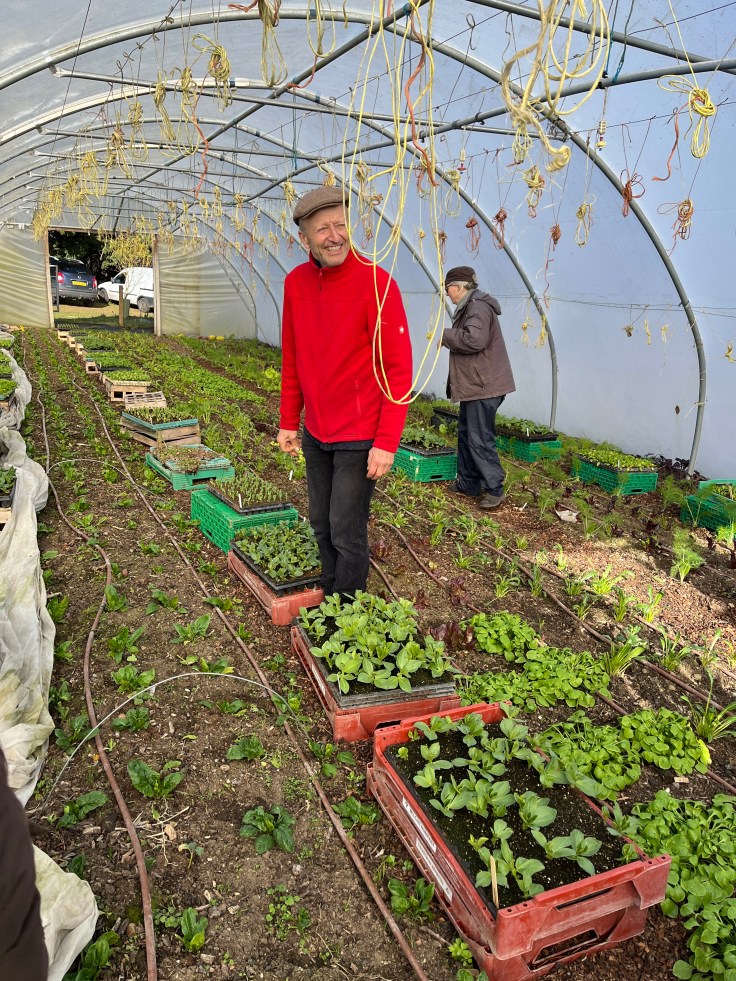
Dowding shared that he plants most of his young seedlings out when they have only just broken the soil. He said that seedlings are more likely to grow strong- and quickly, if they are planted out in their final positions as soon as possible. This is great news for people who practice succession planting as it means more room in the greenhouse or windowsill.
Hardening-off
Most famous gardeners swear by hardening-off young crops. I cannot say this is something I practice. I tend to put plants straight out from my unheated greenhouse into their place in the raised bed and I was happy to hear confirmation that hardening off is not necessary.
Sure, if there is a sudden drop in temperature once plants go outside or there is a drastic temperature difference there may be a shock but I have never had any plants suffer negatively in this respect. At the end of the day, plants tend to do better outside, in the ground than in pots. Additionally, if they are planted out as soon as possible, young seedlings tend to fare much acclimatise much quicker.
Maintenance
Dowding is a fan of using white fleece material during cold snaps to drape over crops.
If you have a large area, such as a allotment plot that you can not get to regularly to weed, secure black plastic over your beds and cut holes around plants to minimize weeds and retain moisture in the soil.
Conclusion
It was a great day. I learned a lot and met some fab people. The timing was great as well- early on in the growing season, everyone who participated left inspired to put tips and tricks we had learned into our own gardens and plots. Dowding certainly knows a thing or two about a thing or two.

 All Homesteading
Leave a comment