Time to read 10 mins
I review some commonly found peat-free multi-purpose composts and give you the scoop on some other peat/free alternatives below.
What is Peat?
Peat is an unsustainable growing medium that has provided the base of commercially supplied garden composts (soil) in the UK for decades.
It is mostly made up of organic decomposed matter, but it is found in boggy, water-logged areas around the UK, known as peatlands.
When harvested, it releases large amounts of stored carbon dioxide, adding the already increasing levels of greenhouse gases and it is also unsustainable because it grows back incredibly slowly once it has been harvested.

Banning the Sale of Peat in 2024
In the UK, gardeners have been widely discouraged from using horticultural peat for our house and garden plants for a few years now. In fact, the UK government are set to ban the sale of peat as growing medium altogether from 2024.
Bagged retail growing media accounts for 70% of the peat sold in the UK and is frequently misused, for example being used as a soil improver rather than a medium in which to propagate plants. When this extraction takes place, the carbon stored inside the bog is released as carbon dioxide, contributing to climate change.
– Excerpt taken from UK Gov. website. See Further Reading at bottom of page for resource link.

What is the best peat-free multi-purpose compost to use?
We all want to be responsible gardeners and make the switch from peat to peat-free but I have been searching for years now for a reliable replacement for the peat-based compost that we now know is not so great for the environment.
But I feel like compost companies seem to be struggling to fill commercially available bags of potting mix with peat-free alternatives because I have found the local availability and quality disappointing and unreliable
I have now found my “go to” which I will detail below, but not before giving you the lowdown on the other ubiquitous brands on the market. Here are my feelings on each.
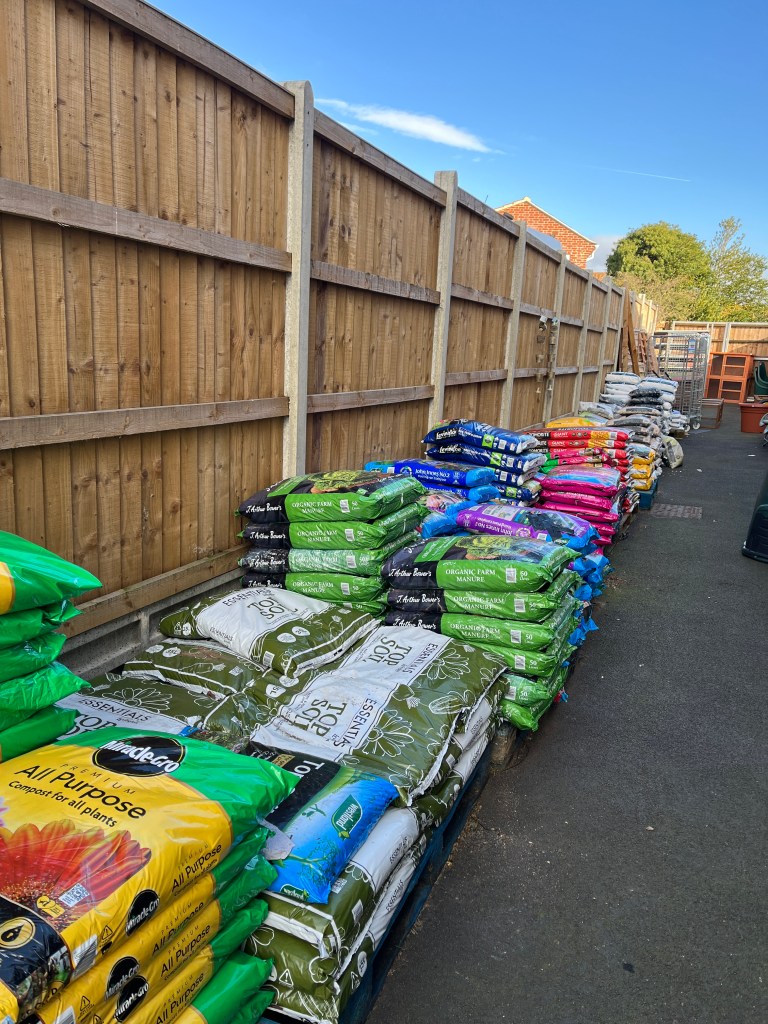
New Horizon Peat Free Multi-purpose Compost – £10.64, 50l Score: 3/5
This is the compost I first started using a couple of years ago because it was the only peat-free brand in stock at my local garden centre.
It’s pretty well priced but, I fear that you get what you pay for. Now the quality of New Horizon is not horrible, actually it’s pretty easy to work with in that it’s good for potting on but I had to mark it down because I found it so inconsistent.
The quality would vary widely from bag to bag. One bag would feel quite nice and soft-almost loamy, making it suitable for use for seed sowing, other bags would contain large clumps of wood chip that would need manual breaking down and sifting.
Verdict: ok to work with and works but texture is very inconsistent from bag to bag.
Miracle Gro Peat-Free Multi-purpose Compost – £9.40, 40l Score: 2.5/5
Now, back in the dark days of 2020, when everyone and their grandma were gardening, bags of compost were pretty hard to find. Miracle Gro, however, was still available.
I purchased a bag to try. However, I can’t shake of the Scott’s Miracle Gro-Monsanto (DDT, non-discriminatory insecticide use scandal) partnership and ultimately, I lack trust and confidence in the product and felt a little icky using their products.
At a glance though, the texture was ok- plants grew and drained water well so it is fit for purpose. For reasons stated previously though, I decided not to use it for anything edible and used it purely for my flower pots.
As one of the cheapest brands on the market, if you can put aside unethical business partnerships and are using it for your flower pots, ok.
Verdict: Unethical connection to bio-toxicity companies, does the job for flowers in pots, would not use for veg or fruit.
Levington Peat-Free Seed Compost – £6.54, 20l, Score: 1/5
Terrible. It’s weird because Levington also do a multi-purpose compost which is decent. The seed and seedling compost though is bad.
The bag arrived open (perhaps the fault of the supplier or torn in transit) but the had a lot of sticky clumps in. If you imagine a mix of moistened ground carbon rocks and garden soil…that’s what it was like.
I had to add perlite to the mix because it was not free-draining either. I sowed different seeds into a module tray but absolutely nothing germinated.
I tried again with one or two seeds in nursery pots, nothing. The rest of the bag went in the compost bin.
Verdict: A point given on the score for being peat-free. Don’t bother with this one.
Levington Peat-Free Multi-purpose Compost – £9.90, 40l Score: 3.5/5
Very dark, moist compost.
Decent texture…I found it needs to be used with perlite (that is regularly refreshed for consistent efficacy), as it is not very free-draining as it gets quite “boggy” when plants are watered. Better for potting on, rather than for seeds or seedlings.
Verdict: A reliable premix that is generally good for most mature plants as long as you add aeration.

Clover Peat-Free Multi-purpose Compost – £8.99, 40l Score: 4/5
Very dark, organic mix with a lovely soft, grainy texture.
Verdict: Very easy to work with but gets quite compacted so best to use with vermiculite or perlite for drainage. Well-priced so will buy again.
How I mix my own peat-free growing medium: Coco Coir
Coco Coir (6x 650g brick when water is added, 6x9l= 54l of growing medium per 6 brick pack) Score: 4.5/5 This is the link to the Amazon product I purchase and use. If you use my link to purchase any coco coir, I receive a small commission, at no cost to you.
So as you can see, the discontinuation of peat-based compost has left a gap in the market for quality, reliable and nutrient rich commercially available potting mix. Easy, no faff, one bag for all… but if I can not buy exactly what I want, I prefer to DIY.
Since I have a tortoise and buy bricks of coco coir for her substrate, I learned that this naturally peat-free (though not local), could also be used as a viable and affordable growing medium too.

Coco coir is the ground husks of coconut shells and is bought condensed in a brick or as a disk which makes it light to transport, and easier to store than bags of compost.
When you are ready to use, you add warm water to it and it expands and turns into a light and fluffy growing medium that free drains yet retains just enough water well.
Related: Preparing the garden beds step 1
Coco coir nutrition composition and amendments
Ready to use potting mix, specifically all multi-purpose compost contains added micronutrients that help to feed plants but when you start with a coco coir base, additional nutrients usually need to be added.
For starting seeds, I don’t bother adding anything nutrients as it already contains sufficient levels of phosphorous and potassium and seeds need little nutrients to germinate and start growing.
However, whenever coco coir is to be used for potting on or mature plants, a liquid or slow release feed will need to be added.
To my coco coir, I add a cup of perlite which is a type of volcanic glass which helps with drainage, and I usually add a handful (per container) of well-rotted farmyard manure.
This is added to the bottom of my pots so there’s no chance of burning the roots of my plants, but is still a way to add nutrition slowly to the potting medium.
I add a slow-release fertiliser, if I have any at the time of potting up, or water every two weeks with a seaweed or tomato feed.
Once my own homemade compost is ready, I will use this in pots and beds exactly how I use well-rotted farmyard manure, to enrich and add nutrients to my growing medium.
Verdict: It’s a happy (ahem) medium between sub-par or inconsistent bagged potting mix and peat-based compost we’ve become accustomed to. I’ve knocked half a point off for inconvenience. Sometimes I want the convenience of repotting or planting without having to ensure I have all the components and coco coir mixed with water to just the right consistency and ready to use.
Peat-free Honorary Mentions:
Wool Compost
As a knitter who knits with wool as her fibre of choice, I am well aware of wool used as a peat-free alternative. After all, it is sustainable and biodegradable organic matter. I have yet to try this though at £17.25 per 12l bag, it’s a little pricey.
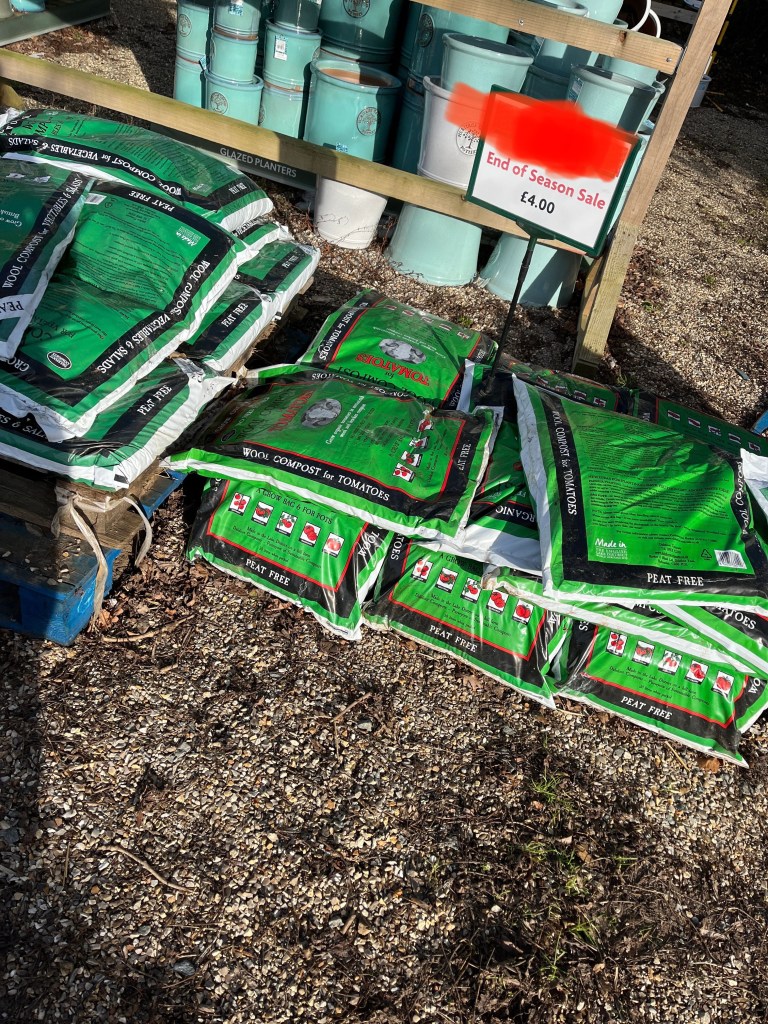
However, I did spot that my other local garden centre was having an end of season sale on Wool Compost (The only peat-free compost that particular store had!) can’t see the quantity, from the pic but looks like a 20l bag for £4!
Worm Compost
I have my eye on some worm compost to try once my current stock of farmyard manure is done. I’ve never used this and at £17.50 20l, its’s not the cheapest either but I have it on good authority (All Hail Charles Dowding!) that worm compost works best as a really good soil enricher so I would use it just like I use farmyard manure so it should last a long time.
Mushroom Compost
Again, not something I have ever used so I can’t comment on its efficacy, but mushroom compost is the organic matter left over from mushroom growing and apparently also works well as a soil conditioner but may still contain peat depending on what the mushrooms were originally grown in.
It can be cheaply bought in bulk, a quick Google tells me that I can purchase a local bulk delivery for £88.95 for 600l. That’s a lot of schrooming. A 40l bag is around £5.
Side bar, I think I remember reading on a gardening page that people who used mushroom compost found a lot of little mushrooms popping up in their plants.
I mean, that sometimes happens with whatever compost you use, and it tends to mean the medium is “healthy” but…I don’t know, enjoy mushrooms to eat, but when they are in soil, or when I see them on my woodland walks, make me feel a little queasy.
One of my little foibles, so I don’t think mushroom compost would ever be the one for me.
There’s still hope for peat-free pre-mixes…
I encourage you to keep trying what your local stores also have available because you may strike gold and luck out with some great peat-free mix.
I too have found gems at some of my local centres but it’s usually when I’ve stumbled across a small company who have produced a small batch.
Access to good, locally-produced stuff seems pretty inconsistent. Retailers sell what they can find, until stocks last. This may not be your experience, but it is currently mine.
My nearest garden centre, past few growing seasons have been quite thin on the ground with peat-free potting mix so I’ve had to come up with a more reliable way to make quality peat free potting soil whenever I need it.
Companies will have to start doing better soon enough though because they will no longer be permitted to sell their peat-based stock.
There are plenty alternatives out there but here’s hoping that we are given options of high-quality, reliable, sustainable and eco-friendly potting mixes soon enough.
If you have found some great peat-free alternatives, please share in the comments!
Further Reading:
Plan to ban the sale of Peat UK Gov.: https://www.gov.uk/government/news/sale-of-horticultural-peat-to-be-banned-in-move-to-protect-englands-precious-peatlands
Charles Dowding: https://charlesdowding.co.uk/
 All Homesteading
Good article. A note about mushroom compost since you have never used it. I have been using it for years. When I purchase it, I buy 5 cubic yards of 50% topsoil/50% mushroom compost from a local nursery. I use it to fill new raised beds and went through 20 cubic yards of this mixture last year as I added 10 new raised beds to my food forest.
Mushroom compost should never be used alone, but mixed with topsoil, finished compost, or worked into an existing bed or plot, as it does not hold water well by itself. By itself, it tends to dry out quickly. However, mixed with any of the above, it makes the soil very light and fluffy, resisting packing which I find is great for root development. Growing in the 50/50 mix is like adding steroids to your plants. When using mushroom compost, I find plant growth and production is always superior.
And, as a side note, in all the years I have been using mushroom compost, I have never seen a mushroom in any of my gardens. Thanks for the good read!
LikeLiked by 1 person
Hi MoonShadows,
Thanks for your response! That’s good to know about the mushroom compost. I have heard similar with regards to the efficacy of mixing mushroom compost. Also reassuring to know you’ve never seen a mushroom so given that it’s reasonably priced, I may consider using it in the future being sure to mix with topsoil or, with time, homemade compost!
LikeLiked by 1 person