As we recognize our responsibility to consume more responsibly, I reflect on what role one of my favourite crafts, knitting, has in the sustainability conversation.
Knitting as Slow Fashion
By its nature, knitting is a slow process. For those who indulge, it is a long, enjoyable way to make clothes, accessories and gifts for ourselves and others. It is means of meditation where each stitch is manually constructed and if working with the right yarn-stitch-needle combo (For me, Plötulopi held double constructing swaths of stockinette, in the round on 4mm metal circulars) each stitch is to be savored and enjoyed. The fact that we end up with something tangible to use of gift at the end of it, is a bonus, or even a coincidence.
Make What We Want
Making your own clothes, whether you knit, crochet or sew, can be a more sustainable act because it helps avoid another contribution to fast fashion. It has been well-documented in recent years that big fashion brands employ unsustainable practices that are bad for workers that are mostly based in developing countries, and bad for the environment so anything we can do to limit our contribution could be a step in the right direction.
There is also the point to be made that we can make exactly what we want, which means ultimately, we will use what we make.
Thirdly, when you make your own clothes, you can also make more sustainable decisions like ensuring you make items that will transcend ephemeral trends and last the test of time by making them to size to fit your actual measurements rather than the blanket 6-8-10… etc standards used to size UK store clothing.
However, this is still a goal for me. Making clothes that fit perfectly takes confidence, experience and skill and time to acquire those. Real talk, I have made some awful, ill-fitting garments as a beginner knitter. Yet, I can’t part with these because although I will never wear these items outside of the house, they are part of my knitting journey.
Lack of skills and experience aside though, this is also a point to be made in favour of handmade clothing. If I go through the expense, time and effort to knit something, I’ll be damned if I’m casting it off to landfill. It’s not so easy to discard compared to something bought online or from a high street store. As I also mostly knit wool, studies show that users are more likely to donate wool garments and accessories they don’t use to charity, compared to other materials, thus extending the life of the garment. Source. This is in stark contrast to the “52 mini-seasons” a year pioneered by Fast-Fashion brands.
Knitting and Sustainability
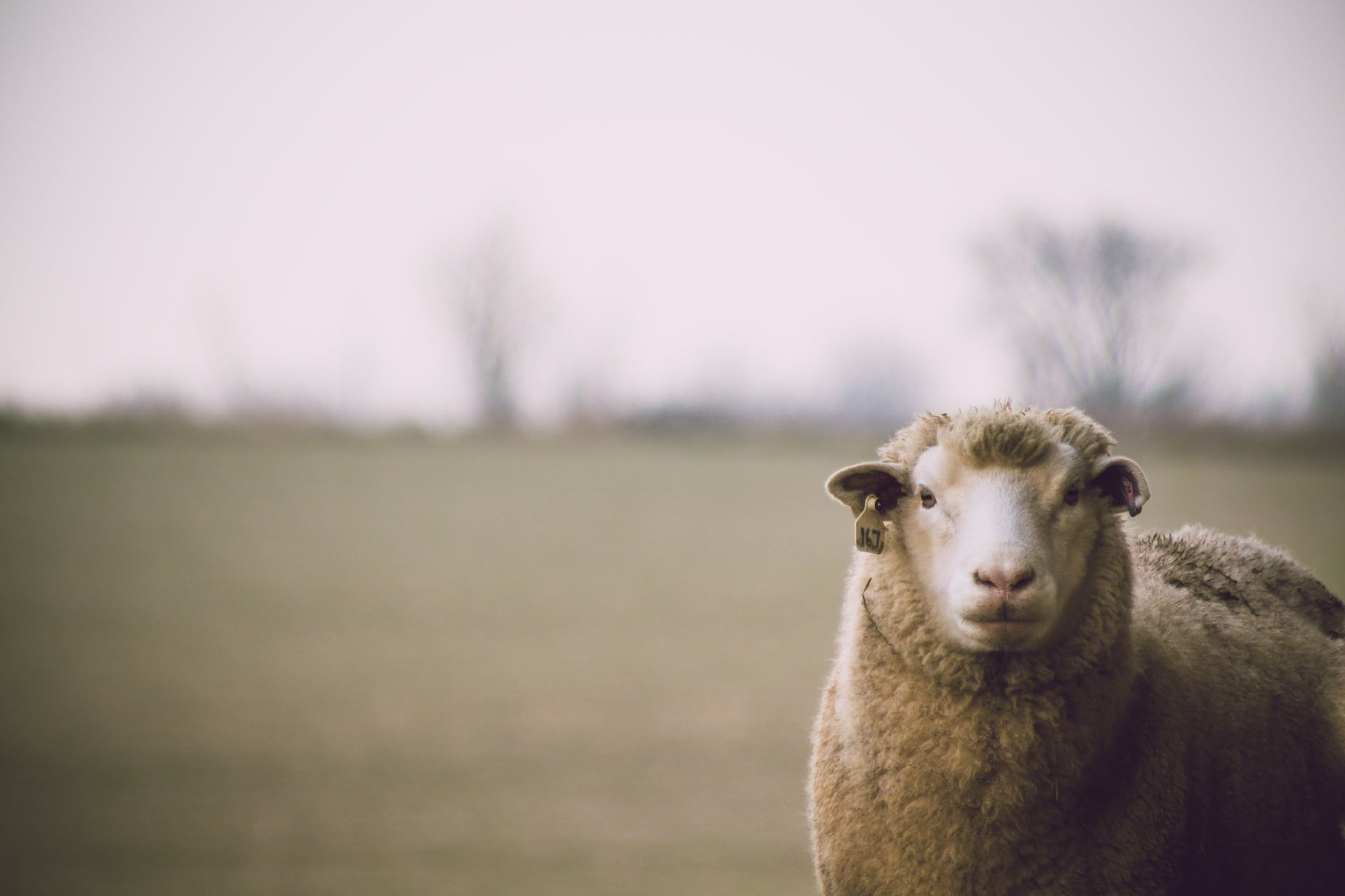
Wool has long been accepted as a sustainable fiber. Sheep grow new fleece every year which needs to be shorn making it a renewable fiber in its natural state.
One of my favourite wool yarns is Plötulopi. It is a minimally processed, rustic, yarn and means I can knit a 100% wool sweater from beautiful, lofty yet warm natural material for £28.
Ístex was established to carry on the Icelandic wool industry that started in Mosfellsbær in 1896. Ístex buys directly from farmers and processes about 99% of all Icelandic wool. Icelandic farmers own 80% of the company. Our commitment with Lopi is to offer high-quality products from Icelandic wool to customers that choose natural, sustainable and eco-friendly living. Our wool is OEKO-TEX Standard 100 certified.
Istex LinkedIn Profile, 2023
Plates of Plötulopi, unspun roving in colour way Oatmeal
I acknowledge the fact that Islandic wool needs to be shipped to me, thus adding to the carbon foot print, but I reason that wool is a durable, easy to care for material that needs washing much less than other fibers, and at lower temperatures. According to Woolmark, wool can sustain 14 wears before it needs to be laundered.
This is no small point. Anything we can do to wash our clothes less will be beneficial for the environment. I recently read here that each person in the UK can release anywhere from 5g to 2.14 kg of microfibers in their laundry a year.
These microfibers go on to pollute the environment and pose a thread to marine life. Though that studies found that ALL materials pose risk, I reason that because wool is biodegradable, it will eventually compose down and act as natural fertiliser adding nutrients back into the soil, not contributing to micro-plastics at sea like polyester or acrylic fibers.
To read more about wool and sustainablity, go here.
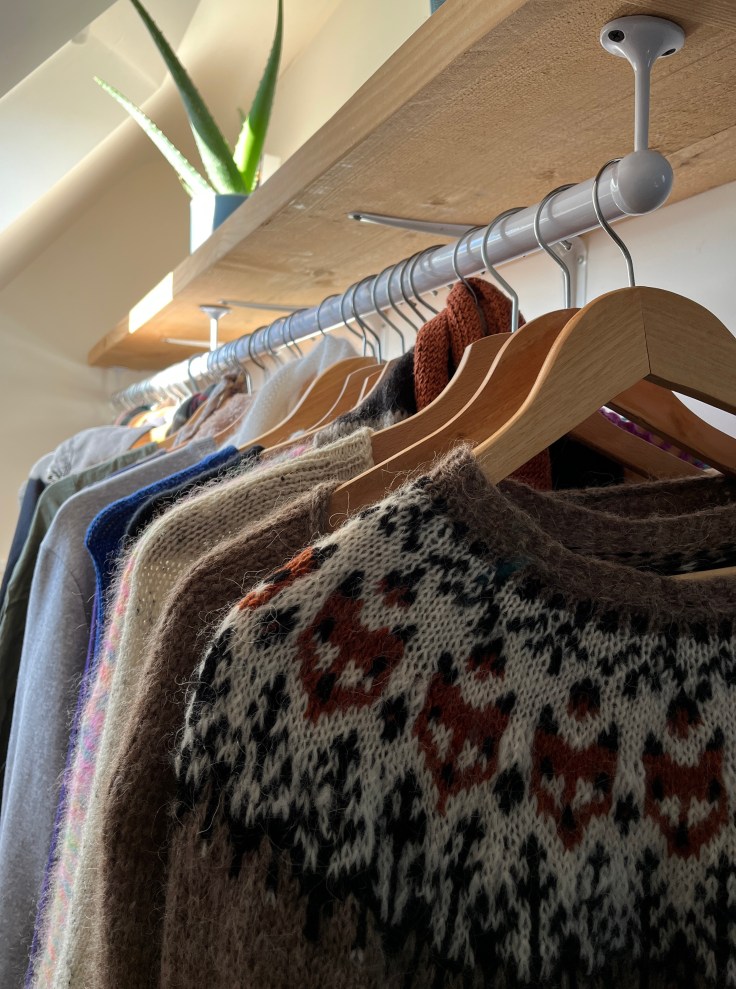
Slowly making my way towards a me-made wardrobe
Wool and Accessibility
Knitting can be more sustainable if we consider yarn choices. This can be a minefield because it puts the onus and responsibility on the consumer to make informed decisions about where and who we give our money to. Even with the best intentions though, we are not always privy to all of the information.
Companies are not always transparent about their processes. Caveat emptor: lying by omission, varying environmental regulations in foreign countries and greenwashing are just some of the things consumers have to navigate to make environmentally sound and informed decisions about their clothing and yarn choices.
There are also pros and cons for using all kinds of fibers, for example, nylon or acrylic content in yarn would be better suited for sturdy boot socks, compared to 100% wool. Sourcing sustainable, traceable yarns and fabrics for your projects is good thing, but I know that this is not always available to everyone.
When I started knitting, I used what I could find which was namely acrylic yarn because it was inexpensive. I liked the range of colours and were accessible. They were great to practice on, with my jumbo wooden needles.
But like everything, once you learn a new skill and acquire the basic skills, you want to experiment with materials. I no longer ever knit with wooden needles and my preferred yarn is wool. I enjoy the process of knitting with wool on smooth metal needles.
Wool is my preference, but I know it may not be for everyone. Many factors influence this.
Namely:
Affordability: Wool can be expensive (whether you are buying pre-made garments or wool yarn). I detail in this post that I exclusively use European and UK based yarn suppliers where the postage is affordable but I know that many people living outside of these zones, postage can soon price them out of such access.
Sensitivity: Some people report sensitivity to wool, namely minimally treated rustic wool that in my experience, grows softer over time, but can feel itchy to some.
Lifestyle and Beliefs: Some avoid the use of wool because of certain lifestyles or beliefs, such as Veganism.
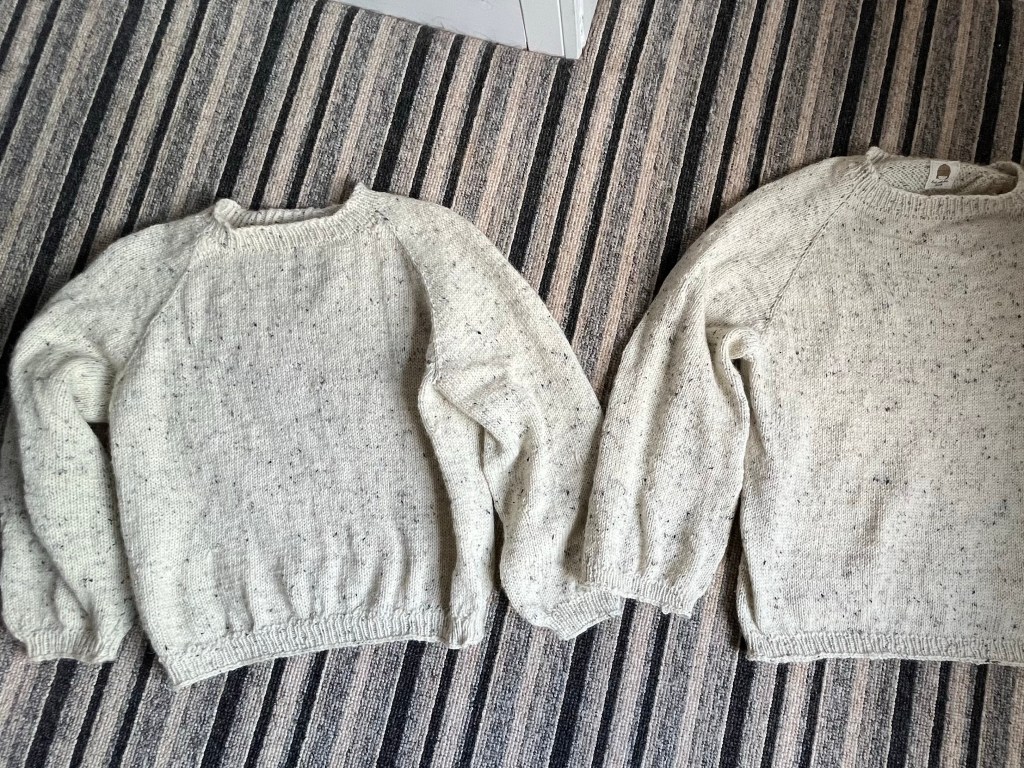
With regards to cost though, I have found some companies where I can purchase 100% new British wool, 4ply yarn on a 500g cone for £25- which I have managed to make 2 sweaters for myself and my husband, holding the yarn double. From here. Love their wools and I certainly would not be able to purchase 2 100% wool sweaters for that price.
His and hers woolyknit sweaters
Knitting Content Creation
I consume a lot of knitting content online which has become very popular past few years. However, what has become apparent, is how much some creators produce in a limited amount of time. If craft podcasts are produced weekly, it is often staggering how many new finished objects there are in each episode. Often times, there seems to be a couple of new pieces showcased every episode, thus disputing my earlier point that knitting is a slow process.
Now I get it, no new finished pieces and WIPS (works in progress) to show in an episode possibly means very little content for their channels.
Yes, I am here for it because clearly I tune in each week, but I can’t help feeling a little icky sometimes, watching creators talk about their yarn acquisitions in front of piles of yarn visible behind them. Surely they will never be able to use up in two lifetimes.
It’s also quite similar to fashion YouTubers who showcase their fast fashion hauls in their videos. It’s an endless stream of advertising and consumerism that sometimes feels like it side-steps the enjoyment and “long-haul” process of knitting.
I am also always curious to find out how prolific knitters store their knits. They don’t seem to be giving items away and knitwear is bulky as all hell to store. I would wager if people are knitting 20-50 sweaters a year, where are these being stored? Not asking for a friend!
Conclusion
No but seriously, we all have some ways to go to strike a balance between being able to enjoy nice things and working towards carbon negativity, or even neutrality but whatever stage we are at, I think it would be a positive step for us to all consume mindfully when we can, take the steps to use what we already have, reuse and recycle and…limit our laundering habits.

 All Homesteading
Leave a comment