Time to read: 4 minutes
What is wasabi?
Wasabi is a member of the Brassicaceae family and it is very similar to horseradish. It grows from a rhizome in the earth similar to ginger or turmeric and is commonly eaten and grown in the wetlands of Japan.
Wasabi is primarily cultivated for the rhizome which is grated into a fine paste and is served as an accompaniment to delicate fish and sushi dishes for it’s mustard-like gentle spiciness.
Wasabi is not often grown in the UK and due to its elusiveness, the almost florescent green paste often served with sushi outside of Japan is not really real wasabi, but horseradish, wasabi’s more ubiquitous cousin.

Uses
Wasabi is a beautiful, fully edible plant, that has a lovely distinct and spicy taste. The big heart-shaped leaves have a gorgeous glossy look similar to mustard greens and add a great kick to salads.
Wasabi leaves and pastes can also be used to add flavour and texture to sandwiches and soup enhancing the flavour of the other ingredients.
My Experience of Growing Wasabi
I have been growing Wasabi in containers in the UK for 4 years, in the greenhouse and garden.
It is an excellent plant that grows well in the UK’s wet and temperate climate and does really well in shade.
Wasabi has the notorious reputation of being difficult to grow but to be honest, that’s not been my experience.
I do not do anything special to take care of my wasabi.
In Spring and Summer, I water them along with my other plants, which is usually daily or every other day in hot weather. In Autumn, I bring them into the greenhouse and they sit under the work bench and they get on with it, needing minimal interference (verging on neglect). The moisture in the air in the greenhouse keep them ticking over until I remember to water them, once a month or more.
The two main things to remember with Wasabi is 1. Keep them out of direct sun. They do not like that at all and in my experience they do well in a shady, boggy area in the garden or under a bench in a greenhouse. 2. They are not hungry feeders and require minimal fertilisation. I feed generally when going into the growing season and that’s about it.
Where to buy Wasabi
I purchased mine years ago from a wasabi specialist online but these days, wasabi can be found from any good garden centre.
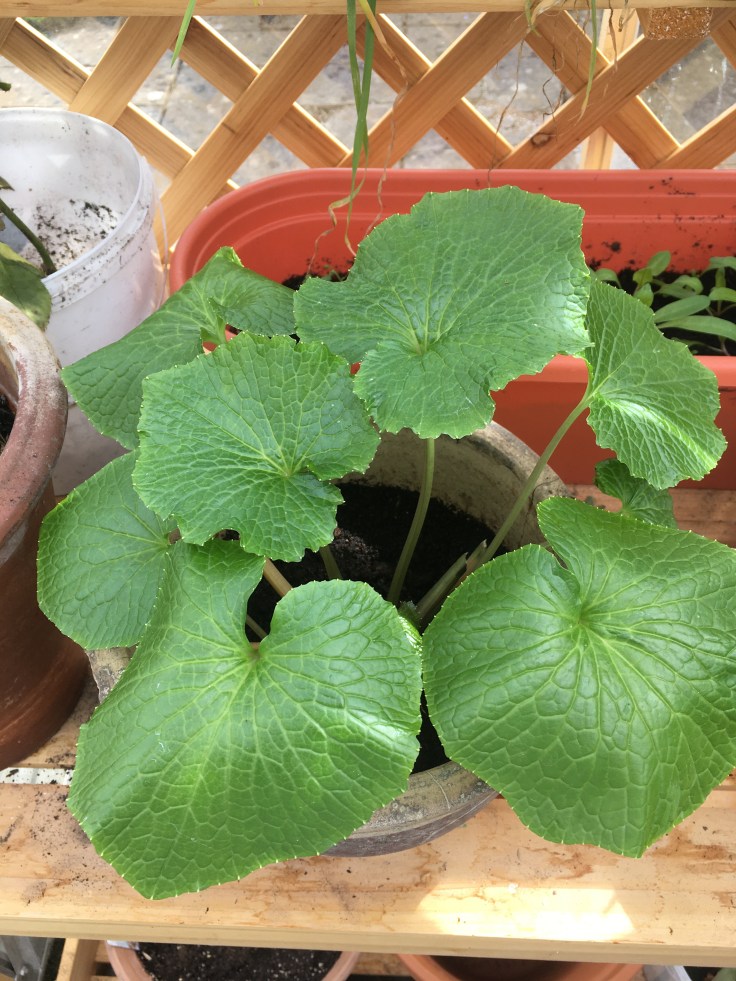
Should I Grow Wasabi in Containers or in the Ground?
I have only ever grown wasabi in containers. Nice big terracotta pots for the medium sized rhizomes.
For offshoot plants, I grow in plastic nursery pots appropriate for size. If you want to grow directly into your garden, I would ensure to harvest the prune and harvest leaves, for salads or sandwiches, regularly and dig up and divide/ harvest the rhizome every few years.
Wasabi shouldn’t take over your garden as the rhizome is slow-growing (well, the rhizome is) but it willingly sprouts leaf stems so you would want to keep that under control with regular harvesing/pruning. Cutting the plant back completely leaving the rhizome in the ground or pot is good practice. Foliage then comes back with a lustrous and beautiful vigor.
Multiplying your Supply
I love growing wasabi. I love any plant that duplicates itself readily.
Although it takes a few years to cultivate enough of a rhizome to harvest and grate for its delicious relish, once a plant is two or more years old, it can be dug up and divided into many many other plants.
During lockdown, I used my Wasabi plants as bartering leverage so hopefully I have not increased the number of successful wasabi growers in the UK.
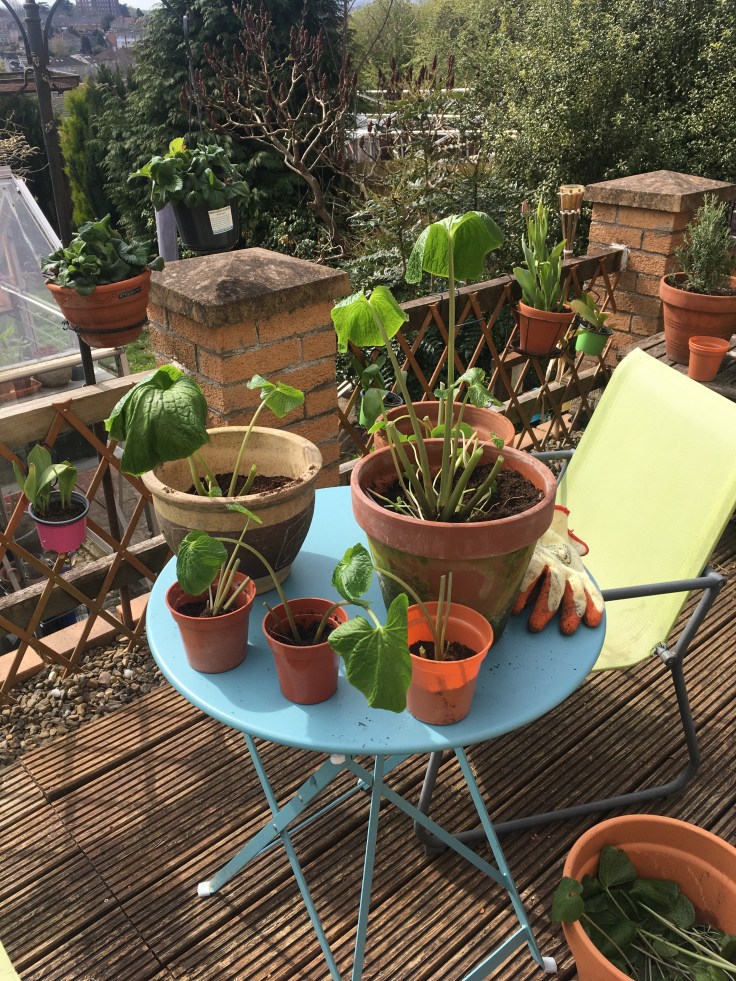
Repotting Wasabi
Watch as I repot one of my young wasabi plants- from that young plant, you can see how easy it is to divide and make about 4 new plants from such a young specimen that has yet to grow much of a rhizome. The plant in the video is about 1 year old.
Related: Growing a Vanilla Orchid and Homemade Vanilla Extract
 All Homesteading
Very helpful guidance. I was looking for more information than came with my wasabi plants and found your very helpful article. Thanks you.
LikeLiked by 1 person
You’re very welcome! Enjoy! They are very fun to grow!
LikeLike