Time to read 6 minutes
I decided to compare the cost of growing and buying, cucumbers and tomato.
Below I calculate how much it costs to buy organic cucumber from my local supermarket, and how much it costs to grow organic cucumber plants.
Similarly with tomatoes, although let it be noted that in my quest to source “organic” tomatoes locally, I could only find ones that claimed to be “Premium”- not organic so we’ll go with that (also something to note).
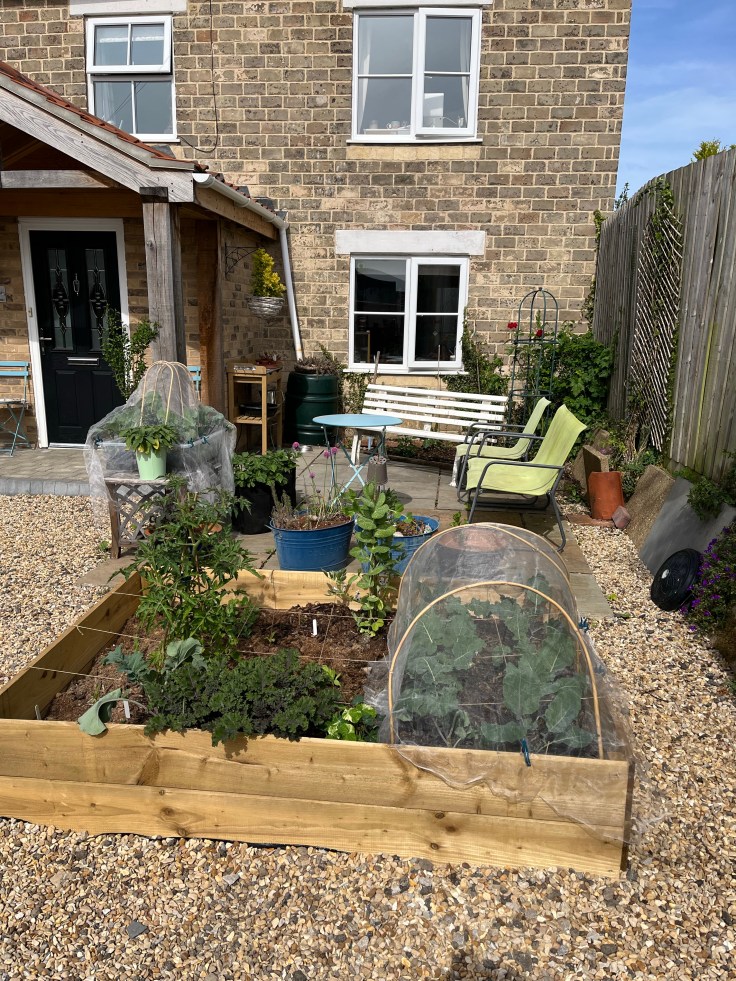
I have grown both cucumbers and tomatoes in the past so I have based my yield per plant on what I have achieved in my own gardens, using the materials I have also since I am in the UK, all costs will be shown is GBP, but for my US readers, at the time of writing this, the US $ conversion rate is 1:1.22 respectively.

Grow Cost Explained
Before we begin, for each plant lets add a “Grow Cost” which will include:
- Pot – For simplicity, we will grow everything in a 15l pot (that’s a 32cm dia. x 32cm depth container) A 15L container will be enough to grow 1 tomato plant and 1 cucumber plant (separately) and costs £3.50 per unit.

- Compost – For argument’s sake, lets say I use a bag of Levington’s Peat-Free Compost (no affiliate, it’s just a peat-free option that is widely available currently in the UK), priced at £9.90 for 40l. I need to fill a pot of 15l, so that’s about £3.70 for the compost.
- Plant Feed and Water– A local organic plant feed like a seaweed or tomato feed is £2.62 for 1L. I’m not sure what the exact percentage of a bottle of feed I use in the cultivation of 1 plant, but since I use a capful diluted into a 5l, watering can weekly over the period of about 3-4weeks, as the plant is beginning to fruit, we will add the total cost of £2.62 to the grow cost and for simplicity, will include water usage in that total as well.
That’s an inital grow cost total of £9.82 for the materials for each plant.
Tomatoes:
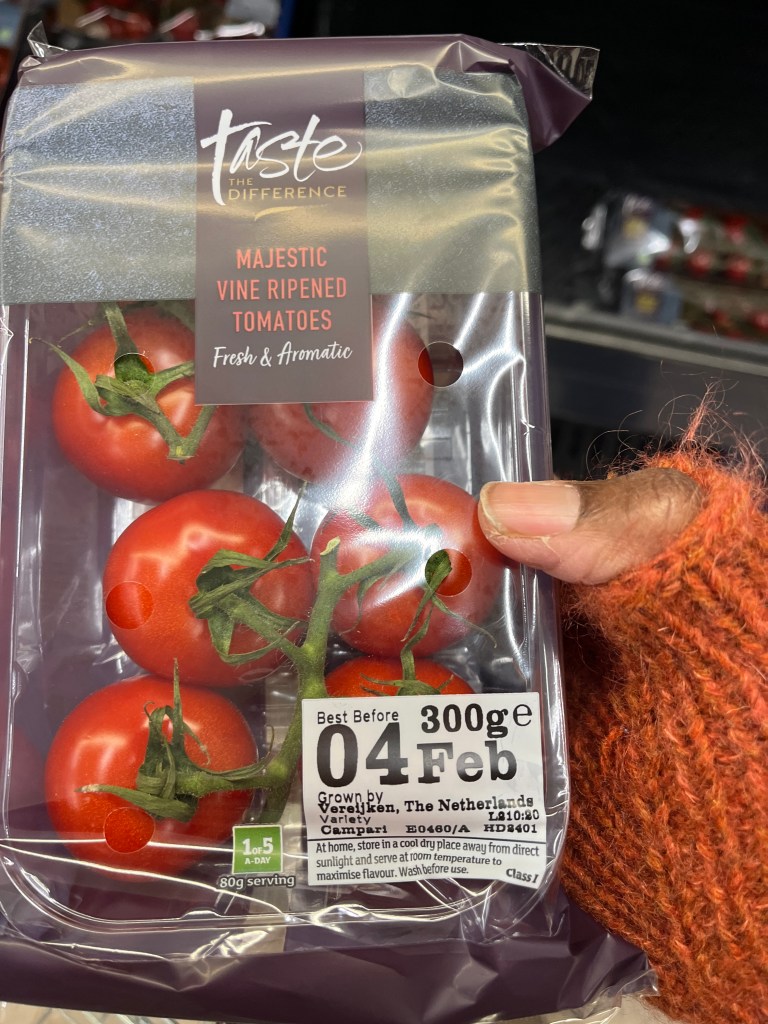
Let’s take a look at how much it costs to buy “Premium” tomatoes (wrapped in lots of single-use plastic) from my local supermarket.
Let’s now compare how much it costs to buy seeds- I don’t know much about the brand “Suttons”, I think they are the middle-priced, long standing (In the market for 200 years selling veg seeds) and well- respected seed producers.
There certainly are cheaper seed packets available on the market but my local garden centre only had these and a few other more expensive brands.

Show your working:
In one 15l pot, you can grow one large indeterminate plant like “Gardener’s Delight”. Each plant produces about 20-30 tomatoes.
Plus £2.99 for 50 seeds
Plus Grow cost: £9.82
Growing Tomato Grand Total: £12.81 for about 30 tomatoes, per plant. Each tomato from one organic plant will cost a total of £0.43 to produce.
Buying Tomato: For the same cost of £12.81, I can buy 6 packets of “Premium” tomatoes which will contain 36 tomatoes, for £0.36 each. So yep, it works out cheaper to buy the same amount of tomatoes as it would to grow 1 plant.
1 plant – 43p each tomato, which is equal to buying 6 packets of tomatoes at 36p each tomato.
However, you still have 49 more seeds in the packet.
The more seeds you plant and plants you grow, the cheaper each tomato and cost to produce will become. For £12.81, I can buy 6 punnets of “premium organic” tomatoes containing 6 tomatoes each, but if I were to plant 5 tomato seeds into a small bed using the whole bag of 40l compost costing £9.90, that would make my total growing cost: £9.90 + £2.62 + £2.99 = £15.51 for 150 tomatoes 15.51/150= 0,10
That means each tomato would cost 10p to produce should you grow 5 plants whereas 150 “Premium” tomatoes would cost £50
In a large garden or allotment, or even over the course of 2-3 years of having your seed packet, if you were to plant all 50 seeds in the packet, that would give you 1,500 tomatoes.
Cucumbers
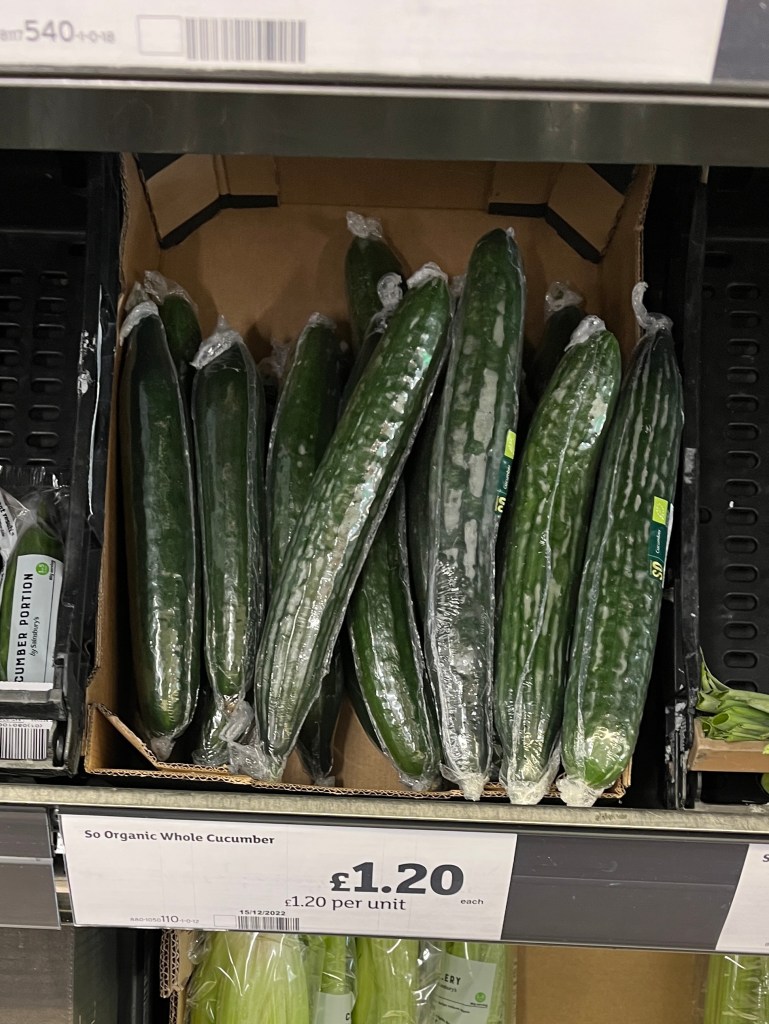
Similarly, here are some organic varieties from the store (fun fact, outside of the UK, long thin cucumbers are called “English” cucumbers, presumably because they were commonly sliced up and put into dainty sandwiches)
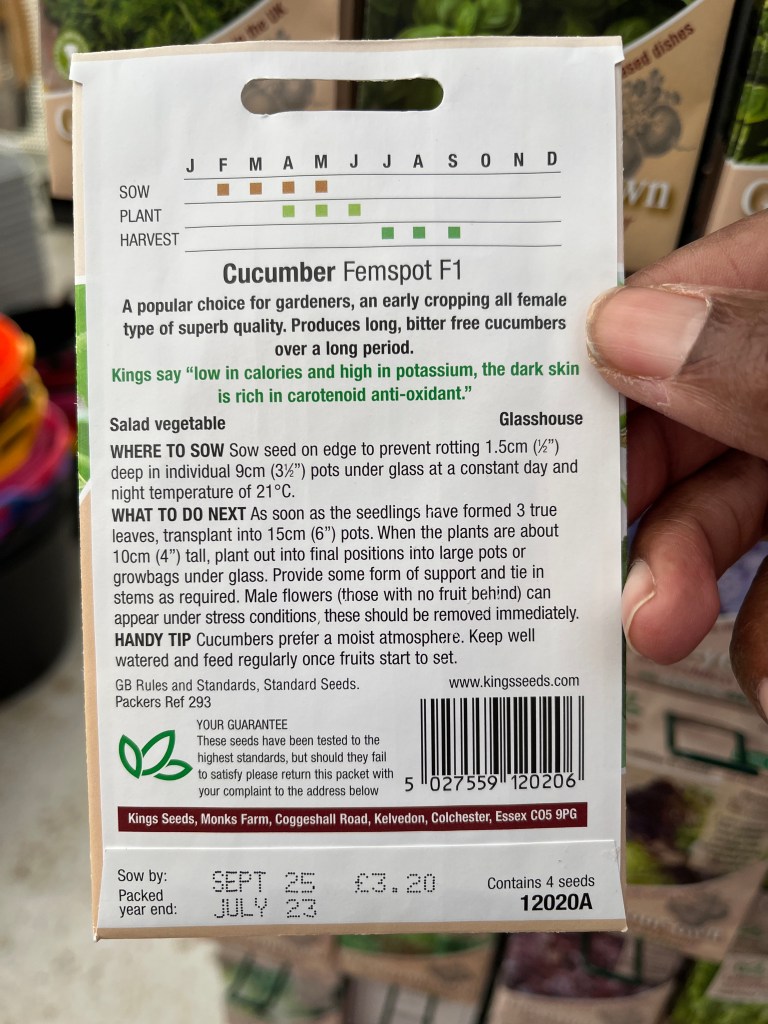
Compared to buying a packet of seeds. Annoyingly though you only get 4 seeds in cucumber seed packets, but they tend to be reliable…and productive.

Show your working:
In one 15l pot, you can grow 1 cucumber plant. Each healthy cucumber plant can produce about 12-15 (the most I have ever gotten is about 12) thick but medium length organic cucumbers with regular harvesting over the period of about 3-4 weeks.
Plus £3.20 for 4 seeds.
Plus £9.82 grow cost.
Growing Cucumber Grand Total: £13.02 per 1 plant yielding about 12-15 cucumbers.
Buying Cucumber: For £13.02, I can buy about 11 organic cucumbers from the shop. Not much difference, here.
But if I were to plant all of the 4 seeds in the pack, again in a bed using 40l of compost, that would give £9.90 + £2.62 + £3.20 = £15.72 for 48 cucumbers. 48 organic cucumbers from the shop would cost £57.60
Conclusion
So although you can buy all the materials you need to grow one plant of either tomatoes or cucumber and just about break even with how much it would cost to buy the same amount of organic produce that one plant would yield, the amount you save, should you grow several plants from your packet of seeds, increases exponentially, especially if you omit some of the costs I have added here, such as sowing and growing directly into the ground, using purely homemade compost and using rain water collected in water butts.
Such measures would be better for your pocket and the environment, honestly and will practically reduce your costs to the cost of the seeds- if you’re really on your A game, you’ll collect your own seeds from your previously grown fruit.
I’m certainly not at that point yet, but I certainly think growing your own is something everyone can and should look at doing. Not to mention how much fun you will have growing healthy, yummy food and the pride you feel harvesting, cooking and eating what you’ve produced from seed. It just makes so much sense.
22 FEB 2023 UPDATE: This article in The Guardian came out today attempting to explain an apparent shortage of fresh food available to customers in the UK, leading to supermarkets to ration fresh produce. Read the article here.
Related: The Pantry: Pickling, Preserving, Storing and Uses
 All Homesteading
Another factor you can put no price on…the joy (and free therapy) of growing your own versus buying from the supermarket. You mentioned Gardener’s Delight tomatoes. I started growing them a few years ago, and they have become one of my staples in the garden. They are super-productive and so delicious!
LikeLiked by 1 person
They are! Do you have any other garden staples? I have a load of various veggie seeds to use up that I will plant early on in the season but would love to grow a few new varieties of veg…do you have any recommendations?
LikeLiked by 1 person
Well, this is what I have on my list for this year. Now, whether I get them all planted or not is another story. Usually, I start all my seeds in my greenhouse, but with the transition to a new greenhouse this Spring, I will be starting less seeds in my house and direct sow many of my seeds this year. I usually like to get them stated in the greenhouse to give them a head start.
Tomatoes
-San Marzano
-Supersweet 100
-Mountain Magic
-Tiny Tim’s
-Rapunzel
-Gardener’s Delight
Peppers
-Shishito
-California Wonder Bells
Carrots
-Tendersweet
-Danvers
Cucumbers
-Marketmore
-Spacemaster
Peas
-Wando
-Lincoln
-Super Snappy
Squash
-Black Beaty Zucchini
-Table Queen Acorn
-Butternut
Cantaloupe
-Sierra Gold
Cabbage
-All Season
-Copenhagen
Beets
-Early Wonder
-Detroit Dark Red
Rutabaga
-American Purple Top
Rhubarb
-Victoria
Swiss Chard
-Rainbow
-Kale
-Premier
-Blue Curled Scotch
Celery
-Utah
Potatoes
-Yuko Gold
-Russet
Onions
-Yellow
-Sweet
-Scallions
Spinach
-Bloomsdale
-Noble Giant
Lettuce
-Monte Carlo Romaine
-Buttercrunch
-Butterhead
Beans
-Blue Lake
-Contender
Herbs
-Genovese Basil
-Monmouth Dill
-Italian Flat Leaf Parsley
-Chives
Flowers
-Marigold – Sparky
-Marigold – French Double Dwarf
-Nasturtium – Glorious Gleam
-Yarrow – Yellow
-Black Eyed Susan
-Shasta Daisies
LikeLike
That’s an impressive list. I will take some inspiration from that. Yes, you will have to wait until your greenhouse is set up until you can direct sow unless you start in the house? Today I have got some broccoli on the go, as well as some echinacea and coriander because they honestly take forever to germinate for me so I thought I would give them a head start!
LikeLiked by 1 person